2015年1月13日星期二

Fate of erozone

2015年1月13日
【明報專訊】GREECE, the epicentre of the debt crisis Europe saw three years ago, has again drawn European and global attention. Because the parties having seats in its legislature have failed to elect a president, its government must go to the country. The results of the general election will come out on January 25. However, because the Greek legislature has had difficulty electing a president, the jitters have plunged the euro to a nine-year low. Syriza, which advocates lifting austerity measures, has done quite well in opinion polls. The Europeans have come to be worried that, if Syriza comes to power, Greece may abandon its austerity measures and eventually leave the eurozone. When the first domino topples, the "great Europe" dream will fall through, and a grave economic crisis will come.

It must be pointed out that it rests with the Greek people to determine their country's fate. How Greece may fare is in their hands. Greece's departure from the eurozone may not matter much because the country accounts only for a mere 2% of its total GDP. However, it may bring about a chain effect. That is a real economic worry of Europe and the world, for, if a precedent is set, Portugal, whose economy was in difficulty like Greece's, may follow suit. What may become of Spain and Italy then is the key issue. Of the four European "economic invalids", Italy, a member of the Group of 7, is the weightiest. And Spain is not to be made light of. Both have been reported to intend to leave the eurozone. In such an event, the eurozone will exist in name only.

It concerns not just one country or region for a major currency zone to collapse. Money flowing in it, the world is in trouble when the eurozone is in trouble. In analysts' eyes, Greece's departure from the eurozone is already "inevitable". Therefore, Germany, a leading member of the eurozone, has been making adequate preparations. In particular, it has given it out that it can absorb the blow. Even so, Germany must adapt itself. The reason is that, if Greece leaves the eurozone, the economic losses the German taxpayer alone will sustain may amount to 80 billion euros. The "big Europe" dream the country has been trying to build up over the years will receive a severe blow and may even collapse.

According to the above, a crisis may arise not so much because the "economic Europe" may receive a blow as because the future of the "political Europe" may be clouded. The "political Europe" has come of the currents of the 1960s, when West European countries sought to rely on themselves instead of the US. Because of the reunification of West Germany and East Germany in 1990, the "political Europe" has had higher expectations of itself. The episode culminated in the establishment of the eurozone. However, as they have different aims, eurozone members are strange bedfellows. Disparities in national strength and progress have led to other problems. It is mainly Germany that has maintained the whole situation.

One may say this year is crucial to Europe. Not only may it see the eurozone disintegrate, but it will also see general elections in many European countries, including the UK, Spain, Portugal, Finland and Denmark. Eurozone membership will figure prominently in those elections. In particular, David Cameron, prime minister of the UK, the bellwether, has said the country should consider leaving the European Union. That may deal a severe blow to European stability. Europe is not exactly in the midst of a raging storm. However, that it is in deep trouble is beyond dispute. 

明報社評2015.01.12﹕希臘政局衝擊歐元區 歐洲夢將醒牽動全球

3年前歐債危機主角希臘再次成為歐洲及全球焦點,由於議會內各黨派無法選出總統,需要解散議會舉行大選,本月25號將有分曉。不過,此前由於議會選舉總統難產,令到歐元飽吃驚風散,直線下挫,見9年新低,如今力主撤銷緊縮政策的「激進左翼聯盟」(Syriza)在民意調查被看好,歐洲開始憂心,一旦Syriza上台,有可能會放棄緊縮政策,最終脫離歐元區,推翻第一隻骨牌,大歐洲夢漸次幻滅,引發巨大經濟危機。

必須指出,希臘未來如何,是希臘人民的決定;是吉是凶,皆在於自己之手。然而,西方尤其是歐盟擔心的是,希臘一旦退出歐元區,儘管影響不會太大,因為希臘經濟規模只佔歐元區的2%,但由此引發的連鎖效應,才是歐洲以及世界經濟的憂慮。因為此例一開,當年與希臘同屬經濟陷於困境的葡萄牙,有可能亦步亦趨;而之後的西班牙及意大利何去何從,始是重點。論經濟規模,這4個歐洲「經濟病友」,當以名列西方七大工業國之一的意大利體型最龐大,西班牙亦不可小覷,兩國都曾經傳出有意退出歐元區,若然局勢發展至此,歐元區名存實亡。

當全球的主要貨幣區崩解,不僅是一個地區一個國家的事,在今天資金流動的世界,歐元區出事就等於全球出事。希臘退出歐元區,在分析家眼中已是「很難避免」的事,因此歐元區大國的德國正做足鋪墊,包括放出風聲稱「可以承受」衝擊。即便如此,德國也須自我調適,因為希臘退出歐元區,單是德國納稅人便要承受800億歐元的經濟損失,而其多年以來一直建構的大歐洲夢想,更會遭到極大打擊,甚至可能分崩離析。

依前所述,危機不全在於「經濟歐洲」的受到衝擊,更是「政治歐洲」的未來陰霾重重。政治歐洲是1960年代出現的西歐脫離美國自立的大潮,1990年代初,西德東德合併,帶來更大的政治歐洲自我期許,以歐元區的成立為最高峰。不過,畢竟各國各有打算,同牀異夢者眾,國力不同、發展差異也帶來另一種煩惱,全靠德國頂住大局。

今年對歐洲來說,堪稱是關鍵的一年,除了歐元區是合是分,還有不少國家將會舉行大選,包括英國、西班牙、葡萄牙、芬蘭及丹麥。初步觀察,歐洲將這選戰的重要議題,尤其是領頭羊的英國,首相卡梅倫表示考慮退出歐盟,構成另一股對歐洲穩定的衝擊力量。此刻的歐洲雖未至於風雨飄搖,但煩惱滿身則是不爭事實。

■Glossary

go to the country﹕hold an election to choose a new parliament

invalid﹕person enfeebled or disabled by illness or injury

bellwether﹕one that takes the lead or initiative

2015年1月12日星期一

Let's be pragmatic about 2017 poll


PUBLISHED : Thursday, 08 January, 2015, 6:50am
UPDATED : Thursday, 08 January, 2015, 10:04am

Hong Kong's quest for democracy has been tougher than expected, as evidenced by the Occupy protests over the past months. Chief Secretary Carrie Lam Cheng Yuet-ngor yesterday made no bones about the daunting challenges ahead as she launched the second round of consultation on political reform. Far from a straight thoroughfare ahead, our road to universal suffrage looks more bumpy and the goalpost increasingly remote.

That should not stop us from moving forward, though. The public is glad that law and order has been largely restored. It is time we moved out of the shadow of the Occupy protests and discuss the detailed electoral arrangements in a rational manner.

That the consultation paper contains few surprises is to be expected. The task force on constitutional reform has no choice but to adhere to the tight framework imposed by the state legislature in August. The 79-day street blockades not only divided the city more than ever, they also dashed hopes of Beijing offering any compromise.

But it is still up to Hong Kong to make full use of the room available and try to hammer out a reform package that is legally and politically acceptable. The issues mapped out in the 68-page document offer some useful guidance. They include the formation of the committee to nominate the chief executive candidates; the thresholds for hopefuls to come forward and to become formal candidates; and the polling methods for voters. They are crucial to the successful implementation of the one person, one vote formula under the Basic Law.

Worryingly, pan-democrat lawmakers still adhere to a confrontational approach and have vowed to veto proposals that strictly follow Beijing's framework. While their stance may still appeal to certain quarters in society, public sentiment is ever-changing. If recent opinion surveys are any reference, support for confrontational tactics has been waning.

The room to manoeuvre may not be large. But Lam is right in saying that confrontation only reduces the options. The choice is clear: give everyone a vote in the chief executive race rather than settle for the status quo. It is incumbent upon us to make the most of the opportunities within the rules given and come up with a package that stands a good chance of approval. With pragmatism and compromise, one person, one vote in 2017 can be achieved.

2010 LPAT proofreading - Question no. 2

For instant, they spend a lot of time in fashion and idols.

Corrected sentence: For instance, they spend a lot of time on fashion and idols.


instance /ˈɪn.stənts/  a particular situation, event or fact, especially an example of something that happens generally


instant/ˈɪn.stənt/ happening immediately, without any delay


"Spend on" instead of "spend in" 

She spends a lot of money on clothes.

Shinzo Abe must face up to history

Shinzo Abe

Shinzo Abe is president of the Liberal Democratic Party and was elected prime minister of Japan in December 2012. He also served as prime minister in 2006 after being elected by a special session of Japan’s National Diet, but resigned after less than a year.


PUBLISHED : Sunday, 11 January, 2015, 7:29am
UPDATED : Sunday, 11 January, 2015, 3:54pm

Time is said to heal all wounds, but the scars of Japan's wartime atrocities in Asia are still obvious in China and the Korean peninsula as the region prepares to mark the 70th anniversary of the end of the second world war. Although the nations have solid trade and tourism ties with their former colonial aggressor, diplomatic relations remain poor, soured by territorial disputes and rising nationalism. Commemorations are times for reflection and there has been concern that Japanese Prime Minister Shinzo Abe would use the occasion to further a right-wing agenda. His announcement that he plans to issue a special statement that would include an expression of remorse has caused as much hope as worry.

Abe did not make clear what the statement, to be issued on August 15, the day of Japan's surrender, would contain. What it says will be scrutinised by governments the world over, but especially so by Beijing and Seoul. They will expect it to go further than those given by previous leaders, viewed as being insufficiently repentant. If it is as deeply apologetic as is hoped, there is every chance that relations can be rebuilt.

But historical revisionism is growing in Japan. Abe caused outrage when he and lawmakers visited the Yasukuni shrine honouring convicted war criminals in 2013, and there is no certainty that they will stay away at so sensitive a time. Measures to reinterpret the pacifist constitution are under way.

Former prime minister Tomiichi Murayama acknowledged in marking the 50th anniversary of the war in 1995 that Japanese colonial rule and aggression had caused "tremendous damage and suffering" and expressed "deep remorse" and "heartfelt apology". Through such statements and billions of dollars of development aid given to Asia, some Japanese believe there has been enough contrition and it is time to move on. But as much as that may be wished for, it is not possible while those who suffered do not feel Japan has sufficiently faced up to its past.

The statement will be an opportunity for Abe to reach out and end animosity. In the months leading up to the anniversary, he should begin smoothing ties by ensuring he and his ministers are more careful about what they say and do; actions speak louder than words, after all. But the commemoration also offers a chance for Japanese to debate their wartime conduct. Japan has a proud post-war record of being a peace-loving nation and only by ensuring that lessons are learned from past mistakes can that be maintained.

Tax rise will help kick the smoking habit


PUBLISHED : Monday, 12 January, 2015, 6:59am
UPDATED : Monday, 12 January, 2015, 10:07amsmoking-dw-net.jpg


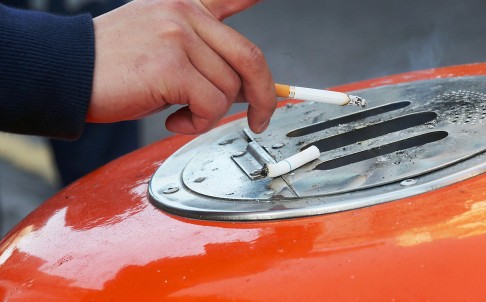
A proven fact is that higher cigarette tax rates mean fewer smokers. There is no better way to force people to kick the habit, deter the young and protect against secondhand smoke. It is in the interests of public health. Finance Secretary John Tsang Chun-wah's upcoming budget should feature implementation of a significant increase in the tobacco levy.
Deter/dɪˈtɜːr/: to prevent from doing something or to make someone lessenthusiastic about doing something by making it difficult for them to do it or by threatening bad results if they do it
levy: /ˈlev.i/ an amount of money, such as a tax, that you have to pay to agovernment or organization

There have only been two sizeable rises in the tax since 1999, despite frequent World Health Organisation recommendations. The current rate on a pack of cigarettes is 69 per cent, one of the highest globally. Yet a recent survey by the Council on Smoking and Health and the University of Hong Kong found that the majority of people would like the levels to be even higher. On average, they believed the cost per pack should be raised from the present HK$55 to HK$106, but surprisingly, the 800 smokers questioned thought it should be even higher, at HK$171.
The council's analysis determines that doubling the tax would cut the smoking rate over one to two years from 10.7 per cent of people above the age of 15 - about 650,000 - to between 9.5 and 9.9 per cent. Those are already outstanding figures by international standards, but the dangers of smoking mean that we should always be striving for improvement. Looking to taxes is by far the most effective strategy, especially towards young people: it makes the habit unaffordable.
outstanding: excellent; clearly very much better than what is usual

Higher taxes are objected to by the tobacco industry, which claims each rise leads to greater levels of cigarette smuggling. Most black market activity involves the mainland, where a smoking culture means it has some of the world's highest per capita rates. It is undeniable that price rises prompt some people to turn to illegal sources, but that should not be a cause to reject the idea. Better law enforcement is the solution.
prompt /prɒmpt/ to make someone decide to say or do something
Taxes alone do not deter or prevent smoking. Education also has an important role. Schools, health professionals and the anti-smoking lobby have to lift efforts. But in the short to medium term, big price hikes will have the greatest impact.

Who has the last word on hk affairs?

【明報專訊】AT a seminar held in Beijing, Chen Zuo'er, chairman of the National Association of Study on Hong Kong and Macau, said that, since the establishment of the Hong Kong SAR, a considerable portion of young people had been lacking in national and civic awareness, which showed there were problems with Hong Kong's education front.

Front: a particular area of activity
Example: There are problems in the environmental front as there are many pollution in Hong Kong.

The association has pinpointed Hong Kong's young people and its education system as the main problems exposed by the Occupy movement. Such findings display to a large extent the association's good grasp of the root cause of the Occupy movement, though it has omitted to mention it was triggered by the controversy over constitutional reform. In the wake of the Occupy movement, it is reasonable to think that young people, given what they did during the protests, do not know our country enough or understand the Basic Law correctly and suggest that more should be done to educate them (e.g. by promoting national education, enhancing their knowledge of and sense of belonging to our country, promoting a correct understanding of the Basic Law and even stepping up decolonisation education), though it is another matter whether such measures are the right or efficacious cures.

pinpointed: to discover or describe the exact facts about something

But at the seminar, Chen lashed out at education in Hong Kong and asked a string of rhetorical questions: Were the country's sovereignty, security and development interests taken into account in developing curricula and making policies of school administration? Why did chaos reign in Hong Kong's education front during the Occupy protests, which were illegal? Why are young people, who merely began learning to talk when Hong Kong reverted to Chinese sovereignty, are at the forefront of the storming of the Legco Complex and the government headquarters? Chen went on to suggest, "Does this not have to do with the incompatibility between the authorities' ideas of education and the constitution of China, the 'one country, two systems' policy and the Basic Law, all of which have been brought into force?" By answering the questions he himself had asked, Chen showed he had already formed his own opinion.

lashed out:
 /læʃ/  to suddenly criticise them in an angry way
reign: /reɪn/to be the main feeling or quality in a situation or person


Chen's comments on Hong Kong's Secretary for Education and the problems with Hong Kong's education system point to a question: Who has the last word on Hong Kong affairs? Deng Xiaoping was perfectly aware that the bureaucracy on the mainland was such that mainland officials would never hesitate to wield and manipulate power. He knew that if every leader directly gave Hong Kong his instructions, views or ideas on Hong Kong affairs, it would not know whom to listen to. Hence Deng made it clear who had the last word on Hong Kong affairs. Given recent developments and especially what happened in relation to the Occupy movement, Deng's clear-cut rule once again demonstrates his great foresight and profound wisdom in dealing with the question of Hong Kong.

wield and manipulate power /wiːld/ to have a lot of influence or power over other people

There is now a need to examine whether the central government should restore the "who has the last word" mechanism regarding its handling of Hong Kong affairs. Take Chen's public comments on Hong Kong's Secretary for Education and the problems with its education system. If another mainland official comments on another principal Hong Kong official regarding Hong Kong affairs, what should he, the Chief Executive and the SAR government do? Should they take his comments seriously or ignore them? An outsider may think they will feel perplexed.

perplexed/pəˈpleks/ to confuse and worry someone slightly by being difficult tounderstand or solve

明報社評2015.01.09﹕香港事務誰說了算 應研議是否再界定

全國港澳研究會會長陳佐洱在北京舉行的一個研討會上發言時,認為香港特區成立以來,有相當一部分青年的國家公民意識存在很大缺失,說明香港教育領域存在不少問題,云云。

全國港澳研究會把佔領行動折射出來的情况,歸結為青年和教育兩項問題,在迴避政改爭議觸發佔領行動的前提下,這兩個歸結算是掌握了整個運動的核心。本來,對年輕人在運動的表現,認為他們不認識國家、對《基本法》缺乏正確了解,提議在教育方面多做工夫,包括推廣國民教育,加強年輕人對國家民族的認識和認同,正確認識基本法,甚至建議加強去殖民化教育等,先不論是否對症下藥和能否奏效,作為應對「後佔領」的一些手段,都可以理解。

不過,陳佐洱在研討會上猛批香港教育問題,他以反問方式說,在制訂課程設計、學校管理政策時,是否有考慮國家主權、安全、發展利益的利弊得失;為何非法佔中時,香港教育領域亂象叢生;為何香港回歸時才哇哇學語的娃娃,現在有人成為衝擊立法會及政府總部的排頭兵。陳佐洱接着說,「這是不是與當局秉持的教育理念與貫徹實施的中國憲法、一國兩制方針及基本法有不銜接的地方」。陳佐洱自問自答,在他心目中,實際上早有定見。

陳佐洱點評香港教育問題和教育局長,折射出一個問題,就是關於香港事務究竟誰說了算?當年,鄧小平深知內地官僚體制,不會吝於用權弄權,有關香港事務,若各個領導人都有指示、提意見、有說法,並直接給香港表達或提出,香港就不知道該聽誰的。鄧小平曾經清晰指定香港事務「誰說了算」;近年、特別是近期環繞政改爭議等事態發展,鄧小平「誰說了算」的一刀切規定,再顯示他在香港問題上的高瞻遠矚大智慧。

今時今日,中央處理香港事務,有需要重新研議是否恢復「誰說了算」機制。以陳佐洱在公開場合點評香港教育問題和教育局長為例,若其他相關人等就香港事務點評其他主要官員,則特首、特區政府和相關局長應該怎樣體待?當一回事抑或毋須理會?從局外人看來他們會感受到困擾。

■Glossary

efficacious﹕producing or sure to produce the desire effect

lash﹕criticise in an angry way

perplexed﹕confused and anxious because you are unable to understand something

2015年1月11日星期日

2010 LPAT oral passage - The waiting room

The doctor's waiting room, which was very small,
was almost full when the Turpins (tur窮) entered and Mrs. Turpin,
who was very large,
made it look even smaller by her presence.

 /ðə/  /ˈdɒk.tər/  /weɪt/ /ruːm/   /wɪtʃ/ /wɒz/     /ˈver.i/ /smɔːl/,
/wɒz/   /ˈɔːl.məʊst/ /fʊl/ /wen/ /ðə/ /ˈen.tər/ /ænd/  /ˈmɪs.ɪz/     ,
   /huː/  /wɒz/     /ˈver.i/              /lɑːdʒ/,
/meɪd/ /ɪt/  /lʊk/ /ˈiː.vən/ /smɔːl/ /baɪ/  /hɜːr/ /ˈprez.əns/.

She stood looming at the head of the magazine table set in the center of it, 
a living demonstration that the room was inadequate and ridiculous. 

 /ʃiː/  /stʊd/ /ˈluː.mɪŋ/      /hed/     /ˌmæɡ.əˈziːn/ /ˈteɪ.bl̩/ set/ /ˈsen.tər/ 

    /ˈlɪv.ɪŋ/   /ˌdem.ənˈstreɪ.ʃən/   /ðæt/   /ðə/   /ruːm/            /ɪˈnæd.ɪ.kwət/   /rɪˈdɪk.jʊ.ləs/

Her little bright black eyes took in all the patients as she sized up the seating situation.


/hɜːr/  /ˈlɪt.l̩/ /braɪt/  /blæk/ /aɪ/ /tʊk/ /ɪn/  /ɔːl/   /ˈpeɪ.ʃənt/ /əz/  /ʃiː/   /saɪz/     /ˈsiː.tɪŋ/ /ˌsɪt.juˈeɪ.ʃən/


There are one vacant chair and a place on a sofa occupied by a blond child in a dirty blue romper who should have been told to move over and make  room for the lady. 

He was five or six, but Mrs. Turpin saw at once that no one was going to tell him to move over. 

He was slumped down in the seat, his arms idle at his sides and his eyes idle in his head; his nose ran unchecked.

Mrs. Turpin put a firm hand on Claud's shoulder and said in a voice that included anyone who wanted to listen, "Claud, yousit in that chair there," and gave him a push down into the vacant one.

Claud was florid and bald and sturdy, somewhat shorter than Mrs. Turpin, but he sat down as if he were accustomed to doing what she told him to. 

Mrs. Turpin remained standing. 

The only man in the room besides Claud was a lean stringy old fellow with a rusty hand spread out on each knee, whose eyes were closed as if he were asleep or dead or pretending to be so as not to get up and offer her his seat.

Claud looked up with a sigh and made as if to rise.

"Sit down," Mrs. Turpin said. "You know you're not supposed to stand on that leg.

He has an ulcer on his leg," she explained.

"My!" the pleasant lady said. "How did you do that?"

"A cow kicked him, " Mrs. Turpin said.

"Goodness!" said the lady.